
Kitchen Lighting Design: How the Right Lighting Transforms Form and Function
When planning a kitchen, lighting often takes a back seat to cabinetry, countertops, and appliances. But lighting is what brings all of those elements together. Without it, even the most beautiful kitchen can feel flat, impractical, or unfinished.
We’ve seen kitchens with stunning materials that still miss the mark simply because the lighting wasn’t carefully considered. Thoughtful kitchen lighting design improves how the space functions day to day, highlights the finishes you’ve invested in, and creates a warm, welcoming atmosphere that makes the kitchen enjoyable to use.
The most successful kitchens rely on layered lighting—a combination of ambient, task, and accent lighting working together to support both form and function.
Why Kitchen Lighting Design Matters
The kitchen is one of the most heavily used rooms in the home. It needs to support everything from early mornings and busy weeknights to casual entertaining and family gatherings. Yet many kitchens still rely on a single overhead light to do all the work.
That’s often when homeowners realize something isn’t working. One fixture rarely provides enough light for food prep, cleanup, and everyday use. A layered lighting plan improves visibility, safety, and comfort—while also making the space feel brighter and more inviting.
Lighting also plays a major role in how materials appear. Proper lighting enhances color, texture, and depth, helping cabinetry, countertops, and finishes look their best throughout the day.
The Three Essential Layers of Kitchen Lighting
Ambient Lighting: The Foundation of the Space
Ambient lighting provides overall illumination and sets the tone for the kitchen as a whole. It allows you to move comfortably throughout the space and creates a balanced level of brightness.
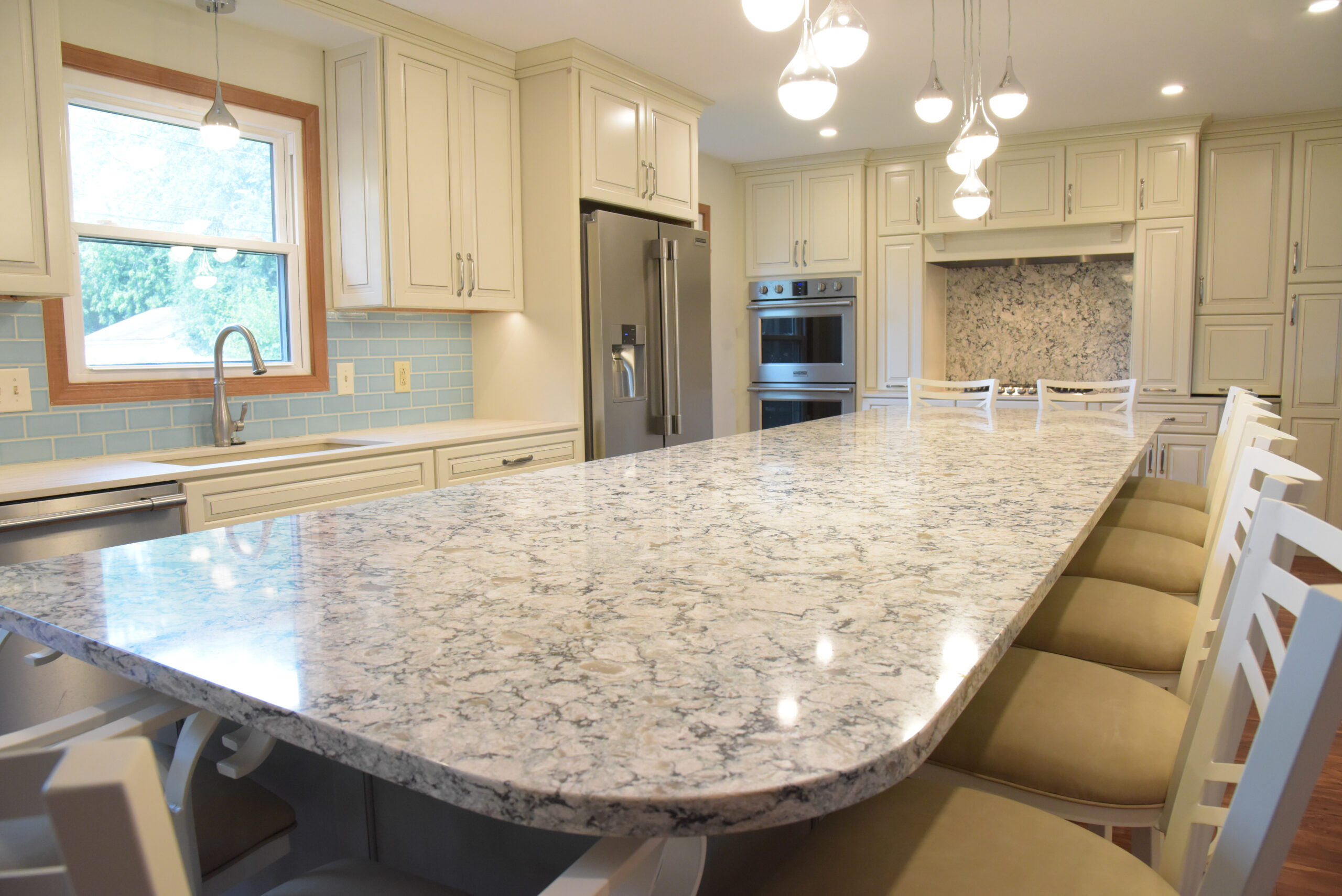
Recessed ceiling lights, flush-mount fixtures, and larger pendants are common choices for ambient lighting. Recessed lighting is especially popular in kitchens because it offers even coverage without competing visually with other design elements.
Dimmers are highly recommended for this layer. Bright lighting is ideal for cooking and cleaning, while softer light in the evening helps the kitchen feel more relaxed and comfortable.
This is where a well-planned lighting design starts to come together.
Task Lighting: Lighting for Everyday Use
Task lighting focuses on the areas where work happens—countertops, kitchen islands, sinks, and cooking surfaces.
In many kitchens, overhead lighting creates shadows right where you need light the most. Under-cabinet lighting addresses this issue by directing light onto work surfaces without adding visual clutter.
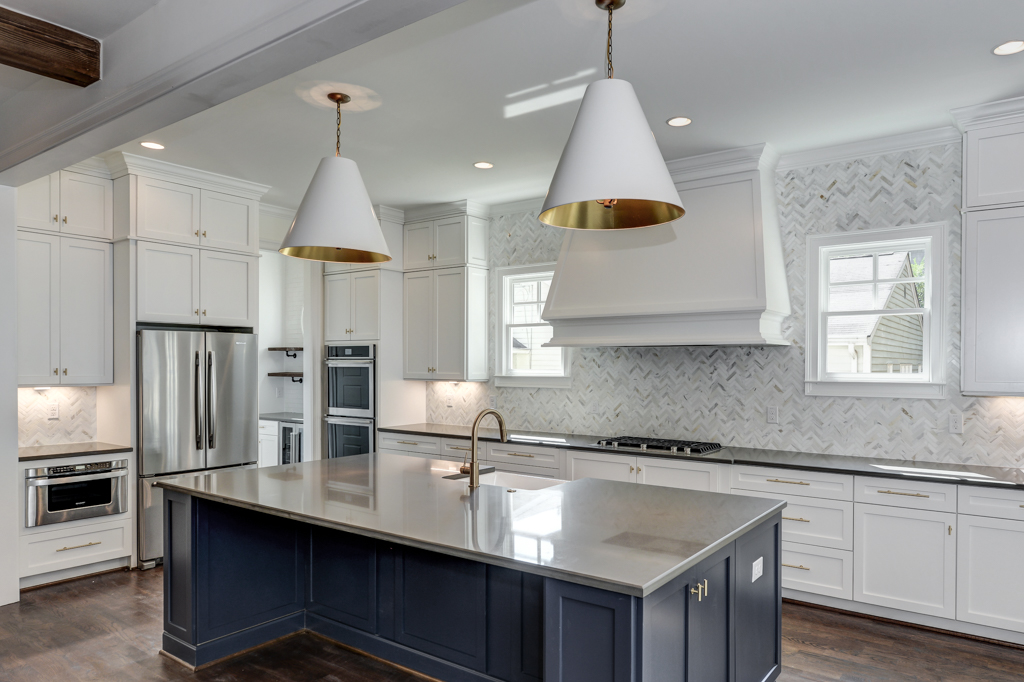
Pendant lights over kitchen islands are another effective solution. They provide focused light for food prep while also serving as a design feature that adds character to the space. When thoughtfully selected, task lighting makes everyday activities easier, safer, and more enjoyable.
Accent Lighting: Adding Warmth and Visual Interest
Accent lighting adds depth and personality to the kitchen. While it isn’t essential for daily tasks, it plays an important role in creating a finished, custom feel.
Lighting inside glass-front cabinets, along open shelving, or beneath base cabinets adds a subtle glow that enhances the overall design. Toe-kick lighting, in particular, is a small detail that can make a big impact—especially in the evening when softer lighting is preferred.
Accent lighting helps the kitchen feel thoughtfully designed rather than purely functional.
Kitchen Lighting Placement Tips That Make a Difference
Even high-quality fixtures won’t perform well if placement is overlooked. Strategic positioning ensures each layer of lighting works as intended.
Recessed lights should be placed slightly in front of cabinetry to avoid casting shadows on countertops. Pendant lights should be centered over islands with proper spacing to maintain clear sightlines. Under-cabinet lighting is most effective when installed near the front of the cabinet rather than pushed toward the wall.
Under-cabinet lighting is often one of the most overlooked upgrades in a kitchen—but it consistently delivers one of the biggest improvements in both function and appearance.
Layering light at different heights—ceiling, countertop, and cabinet level—creates balance and prevents the space from feeling flat or overly bright.
How Lighting Transforms Kitchen Form and Function
Good lighting does more than illuminate a space—it changes how the kitchen is experienced. Functionally, proper lighting supports food preparation, improves safety, and reduces eye strain. From a design perspective, it highlights materials, adds warmth, and helps the kitchen feel more open and inviting.
When lighting is planned with intention, the kitchen works well throughout the day and transitions naturally into a comfortable evening space—without relying on a single switch to do everything.
Designing a Kitchen That Shines
Whether you’re planning a full kitchen remodel or updating specific elements, lighting should never be an afterthought. Small adjustments can make a noticeable difference in how the space looks and functions.
By combining ambient, task, and accent lighting—and placing each with purpose—you create a kitchen that feels balanced, practical, and timeless.
If you’re considering a kitchen update, working with a professional design team can help ensure every detail, including lighting, is planned with intention from the start.
Ready to Get Started?
Visit our showroom to see materials in person, talk through your ideas, and work with one of our expert designers to create the kitchen you’ve always imagined — without the overwhelm.

2729 N. Reynolds Road
Toledo, OH 43615
Stop by or schedule your consultation today.
Recent Comments